
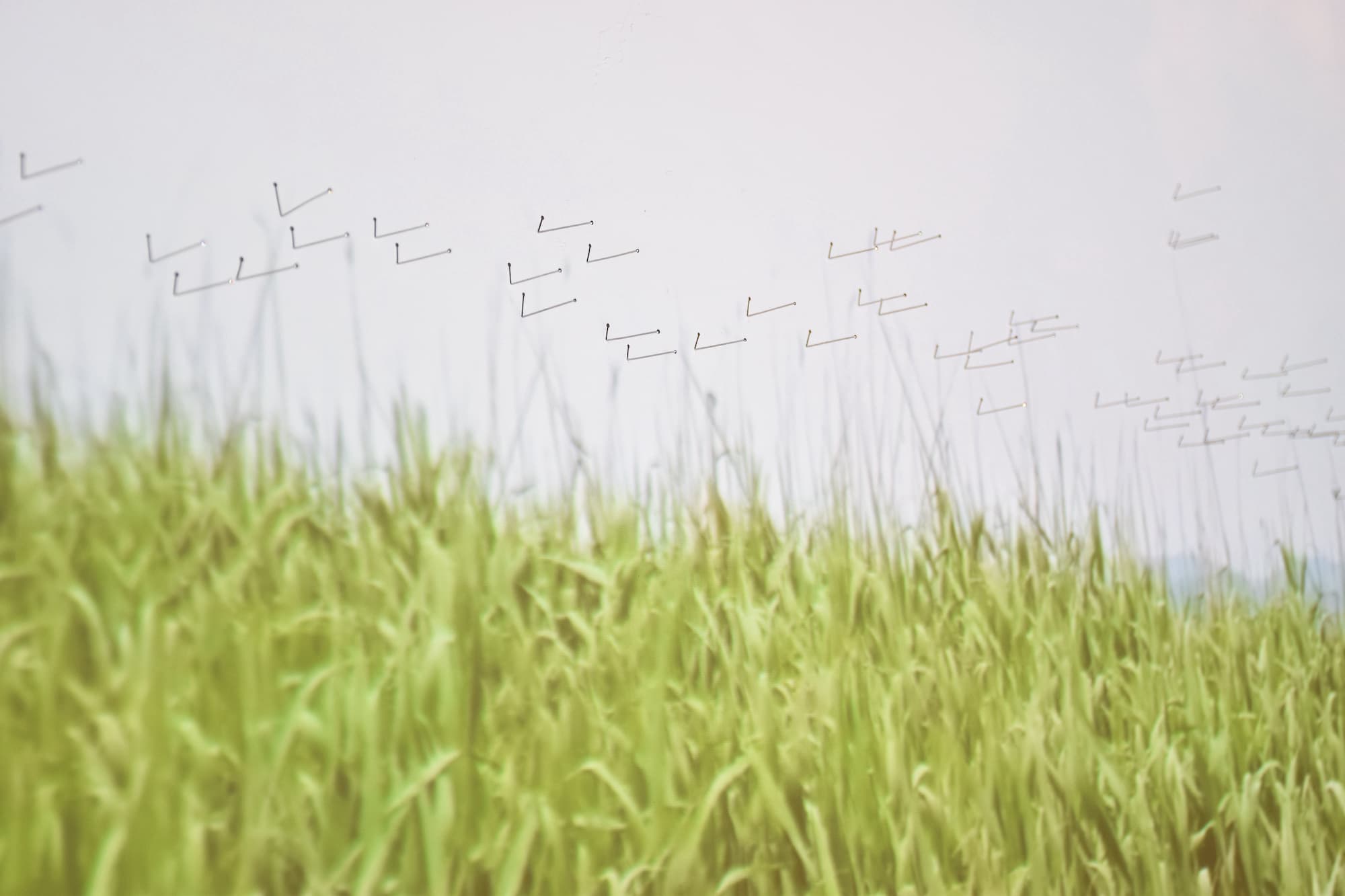
The Garden of Forking Paths
AXEL WANG:
當⼀名新⼿家長已經是⾜夠繁忙的⼀件事了,更不要提同時您的⼯作還是藝術創作。您覺得孕育新生命有給您帶來什麼不一樣的視角嗎?
It’s hectic enough being a new parent, let alone working as an artist at the same time. Do you feel that bringing a new life into the world has given you a different perspective?
YI-TING WANG:
這個問題對於現在的我來說似乎還是有點早,因為我仍然身處於當下的階段之中。生活作息以及工作節奏勢必都因為新生兒的關係而有所調整,我也還在學習如何在創作和照顧小孩之間取得平衡。
生為一位女性,或許是天性使然,或是生理影響心理,我常常放心不下小孩,很難全心全意投入在工作狀態裡,必需不時地在創作者與照顧者之間切換,這大概是影響我最多的部分。但同時,觀察一個新生命,從認識自己的手開始,到一點一滴認知這個世界的過程,我彷彿也跟著他重新認識這個世界。
我很開心自己做了這個決定,孕育一個新生命的經驗對我來說彌足珍貴,也如同創作一件獨一無二的作品一般,唯獨這件作品需要更多的耐心與愛。我期望我的小孩未來能和我一起創作作品,希望他能始終保有對世界的好奇心,與我一同探索這個世界。
I’m guessing that perhaps in a few years, I’ll be able to answer this question properly. My daily routine and working hours have inevitably changed since the baby was born, and I’m still learning how to strike a balance between making art and caring for my child.
As a woman, I wonder if it’s natural, to worry about the child so often that it’s sometimes difficult to fully concentrate on work, as I have to switch constantly between the roles of creator and caregiver. But then, watching him grow day by day and slowly make sense of everything around him, I often feel as though I’m being brought back to a childlike state, seeing things through his eyes and rediscovering the world alongside him.
I’m very glad I made the decision to give birth to a child. For me, as an individual, the experience of bringing a new life into the world is incredibly precious. It’s almost like creating a one-of-a-kind work of art, except that the child demands far more attention, patience and love. I hope that one day we will be able to explore the world together, and perhaps even make art together. More than anything, I hope he will always be curious about the world.
“我著迷於自然媒材當下的狀態,
它並非永遠不變…”“I’m fascinated by the state of natural materials.
They never remain the same…”
AW: 提到新生,我們很難不提及死亡。縱觀您作為藝術家至今的職業生涯,很大一部分作品都與植物有關聯,創作概念也多圍繞著生與死,尤其體現在《不存在的姿態》(2017-2018),是什麼啟發了您開始探討死亡相關的議題,並進行創作呢?
Speaking of new life, I think it’s inevitable that we bring up death. Throughout your career as an artist, much of your practice seems to be entangled with plants. The concepts behind your work often revolve around the essence of life and death, which is particularly well reflected in Disembodied Posture (2017-2018). What inspired you to dwell on the subject and create the piece?
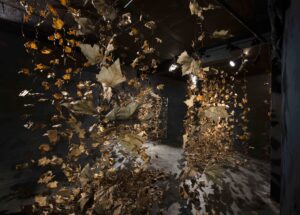
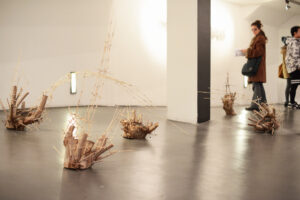
YW: 在創作《不存在的姿態》時,我正經歷回台灣後再一次的文化衝擊,以及面對親人的離世。在一次偶然造訪松園時,我了解到,原本在東方文化中象徵長壽且地位崇高的盆栽,一旦出現些微枯黃,便可能被視為失去價值。在這樣巨大的價值觀差異下,我開始思考生命是否也是如此。透過將松樹擬人化的方式,我試圖提問,我們應該如何界定「死亡」的狀態。同時進一步思考,我們做為仍活著的人,應當如何尊重並面對一個已經或即將逝去的生命。在亞洲文化中,談論死亡似乎仍是一個很忌諱的議題,但透過大家都熟悉的松樹及其象徵意涵,我希望更能廣泛觸及觀者的感受。
When I started working on Disembodied Posture, I had just returned home to Taiwan, trying to overcome another wave of cultural shock, while also dealing with the loss of a family member. I was visiting a pine garden when, by chance, I learnt that bonsai, traditionally a symbol of longevity, and something so culturally significant, can completely lose its value at even the slightest sign of withering. That made me question whether life is perceived in the same way. How do we define death? How do we define the state of being dead? And as those who are still living, what are the appropriate ways to respect both the dying and the deceased? In many Asian societies, talking about death is still somewhat taboo. But through the medium of the pine tree and its symbolic meaning, I hope to open up this conversation and, perhaps, shift conventional perceptions to some extent and engage more people with the subject.
AW: 我想稍稍聊聊您作品中偏技術層面的部分。不難看出您的作品與自然媒材有很強的聯繫,您通常是如何選擇特定材料開始創作的呢?
I would like to touch on the more technical side of your work. It’s clear that your practice has a strong bond with natural materials. What do you take into consideration when choosing a particular material to work with?
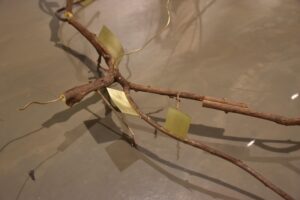
YW: 回想起來,我幾乎所有的創作都與「時間」有關。我一向將自然媒材視為時間的載體,用以呈現當下的狀態,並連結過去和未來。我著迷於自然媒材當下的狀態,它並非永遠不變,相反的是,它會一直持續變化。我依據它當下的狀態,去適應它的改變,進而展開創作。有時我覺得,我在創作時是與這些自然媒材進行一種溝通甚至協商,我不會大幅破壞它們原本的樣貌,而是透過研究觀察它們的特質,從中找出我也感興趣的地方,並將這樣的協商過程呈現給觀者。
Now that I think about it, most of my work is inherently connected to the idea of time. I work with, and express through, natural materials as carriers of time, they reflect the present while connecting the past and the future.
I’m fascinated by the state of natural materials. They never remain the same. On the contrary, they are constantly transforming. I adapt to them, I adapt to the transformations, in order to create. I observe and study their characteristics, learning about their individual qualities. Sometimes it feels like a form of communication, or even negotiation, with the materials. The emerged work is, in a way, a visual investigation and presentation of this process of negotiation.
AW: 談談這次疫情的影響吧。
Has the pandemic affected you in any way?
YW: 這次的疫情讓我有機會嘗試遠端製作裝置。原本以為辦不到的事情,透過不斷的視訊溝通以及大量的紙上作業,最終完成了一件我無法親自製作的裝置。不過在心情上其實很很矛盾,一方面是透過這次機會完成了在法國的展覽,但另一方面可惜的是我從頭到尾都無法親自看見自己完成的裝置,以及感受現場空間,甚至也缺少了與當地機構和藝術家交流的機會。
疫情不僅讓人與人之間的關係產生了疏離,也減少了觀者與作品之間的直接接觸。當實體空間的展示減少,對空間的感知也隨之削弱。平面作品或許可以透過線上藝廊的方式呈現,但藝術裝置卻很難被數位技術取代,至少以目前的科技發展而言仍是如此。
尤其對於我這種常以現地製作完成作品的創作者來說,即使是當下流行的VR技術,我仍持保留態度,因為作品本身的材質質感以及現地製作的場域獨特性都是很難被替代的。但我的確也會思考,如何能夠讓作品在這樣的情況下更貼近觀者,或反其道而行,讓作品成為疫情後的一種期待和希望。
Because of the pandemic, I had the opportunity to experiment with remotely producing an installation for an exhibition in France. At first, I just thought it wasn’t possible in any way. But through a series of constant video calls and extensive written planning, the project was eventually, and successfully completed. Still, I can’t help but feel a bit conflicted about the whole experience, despite the completion, I never got to see the actual finished work with my own eyes, nor experience the space in person, let alone communicate directly with the institutions and artists involved. That part feels like a real loss.
The pandemic has not only created this sense of alienation between people, but also reduced opportunities for direct encounters between viewers and artworks. While 2D works may be relatively easier to translate into an online presentation, the experience evoked by installation work simply cannot be replicated by digital media, at least not for now with current technology.
This is especially true for artists like me, whose work leans toward the site-specific. I still remain rather sceptical of technologies like VR because, the physical presence or qualities, the texture of materials interacting with space, and the sensory experience, cannot truly be replaced. That said, this is the reality we are in, and it’s something I need to consider, about how to bring my work closer to viewers under these circumstances, or perhaps, conversely, how to allow it to become a form of anticipation, something to look forward to after the pandemic.
AW: 在最近的一份關於全球暖化的IPCC(2021)報告中有提到,人類面臨的環境威脅正以前所未有的速度加劇。鑑於您很大一部分的作品都與植物相關,作為一名藝術家,您覺得您有責任讓大眾更加關注到這個議題嗎?
A recent IPCC (2021) report on climate change, notes that the environmental threats facing humanity are intensifying at an unprecedented rate. Given that much of your work is related to plants, do you feel a responsibility as an artist to raise public awareness of these issues?
YW: 對於我們人類在當下所面臨的環境危機,我無庸置疑是抱持高度警覺的。不過,我的作品大部分都在描述探討一些較為抽象的概念,例如時間、生命、節奏、能量等。很老實地說,我並不會特別強調生態或是環保議題,也不會刻意創作過於直白指涉相關議題的作品。
一大原因是因為這是一個顯而易見的事實,如果把顯而易見的事實放在作品內,就如同報紙的標題一樣,一旦被閱讀,很容易讓觀者產生既定立場。當觀者意識到這是一件「環保議題」的作品時,往往不會繼續探究或進一步思考擺放在其眼前的作品是否還具有更深刻的涵意。其他議題也同樣是如此,所以我比較不會針對當下所發生的事件進行創作,也不傾向去重述一個肉眼可見的事實。我相信在2021年的現在,每個人都應該有責任為所處的環境多盡一份心力。
When it comes to the environmental crisis we are facing, I am undoubtedly highly aware of its seriousness. However, most of my work centres on abstract conceptual ideas like time, life, rhythm, energy and so on. Frankly, I don’t tend to specifically emphasise ecological or environmental issues, nor do I deliberately create works that refer to these issues too explicitly.
One of the main reasons is merely that these issues are facts, apparent to everyone. Including an obvious fact in an artwork is like putting it in a newspaper headline: once viewers read it, they can easily develop preconceived ideas. When viewers recognise a work as environment-related, or any issue for that matter, they would step away from engaging more deeply with the work, or think about the underlying meanings, or any implications of this work placed right in front of them.
For that reason, I would prefer not to create any bodies of work as a direct response to current affairs, nor do I seek to restate facts that are already blatantly visible. I believe that, as of 2021, this is a responsibility that no one should shy away from anymore, and that everyone must do whatever they can to contribute toward the cause.
AW: 藝術以外,您還有時間探索一下別的興趣愛好嗎?
Outside of your artistic practice, do you find time for other interests?
YW: 我常常將興趣和工作融為一起,像是過去有一段時間特別喜歡植物,因此以自然媒材為主創作的作品居多。也有段時間喜愛拍照,便常常將影像融入繪畫之中。天生愛實驗的個性讓我熱衷於嘗試新的技法和研究新的材料,這些大概都很像我的興趣,但同時也是我的工作。
創作之外,我也很愛下廚。我認為烹飪是一種可以快速獲得短暫成就感的方法。有時我如果創作陷入膠著,我會為自己精心準備一道料理,從思索食材開始,細細備料,或是研究比較同道料理不同的烹飪方式等,讓自己暫時從創作的焦慮中抽離,並在料理中獲得片刻的滿足。
除此之外,我也很愛閱讀與觀看科幻題材的作品,尤其是反烏托邦的主題,George Orwell 的《1984》與《動物農莊》,Italo Calvino 的《看不見的城市》,Margaret Atwood 的《The Handmaid’s Tale》,電影《Arrival》、《Blade Runner》等作品都會讓我反思當下所處的環境,同時帶我進入一個充滿想像的世界。
More often than not, my interests tend to overlap with my work. There was a period of time when I was particularly drawn to plants, which led me to work extensively with natural materials. At another point, I remember getting into photography and beginning to incorporate images into my drawings. I love to experiment, trying out new techniques and materials, trial and error is a huge part of my creative process.
I’m awfully passionate about cooking. For me, it’s a rather quick way to gain a sense of accomplishment. Whenever I feel stuck, I tend to step away and prepare myself a meal, from picking up the right ingredients, to studying different ways of cooking the same dish. It’s just my way of temporarily shaking off that bottleneck anxiety — hugely satisfying too!
Other than that, I’m a massive sci-fi fan, especially dystopian works. Literature such as George Orwell’s 1984 (1949) and Animal Farm (1945), Invisible Cities (1972) by Italo Calvino, The Handmaid’s Tale (1985) by Margaret Atwood, just to name a few, as well as movies like Arrival (2016), Blade Runner (1982) and so on, have all inspired me to reflect on the world we live in while immersing me in imaginative worlds.
AW: 未來有什麼項目計劃可以與我們分享嗎?這麼多年的藝術創作經驗累積下來,有想做什麼新的嘗試嗎?
Are there any upcoming projects you can share with us? After years of developing your artistic practice, are there any new directions you’d like to explore?
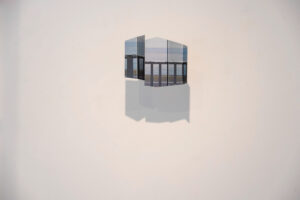
YW: 近期我正在發展一項長期的跟海岸線有關的創作計劃。以界線模糊不明的海岸線為主要敘事結構,線性時間軸為輔,探索台灣不同區段的海岸線影像,進一步探討地理、自然環境與人類行爲之間那些曖昧不明的界線關係。我試圖將可見與不可見的海岸線面貌,重新透過想像縫合,形構出一座想像中的島嶼,創造一種介於現實與想像之間、有限與無限之間、自然與人工之間的新風景。
這次的計畫會是一個跨領域的創作計劃,結合錄像、繪畫、影像以及物件,並以裝置的方式呈現,對我而言,這也是一次在媒材整合與空間處理上的重大挑戰。
I’m currently developing a long-term project related to the coastline of Taiwan. By employing the Taiwanese coastline as the main narrative — different regions under different time periods — I wanted to explore this obscure boundary, this ambiguous relationship between human conduct or intervention and a list of subjects like geography and nature’s commands, realised through a series of visible and invisible coastline imageries, in turn creating a new landscape of an imaginary utopia that exists somewhere between reality and fantasy, the finite and the infinite, the natural and the artificial.
This will be a cross-disciplinary project, combining video, drawing, photography, and objects, presented in the form of an installation. It’s going to be an enormous personal challenge, especially in terms of integrating different media and bringing them together coherently within a single space.
Credits
Editor: Axel Wang
Photography: Courtesy of the artist