
Machine Ghost, Human Shell
AXEL WANG:
Kawita, we gently touched on your work series Tools earlier in the last part of our conversation, and I’ve noticed that you are often labelled as a feminist artist, even though the things that you might want to convey through your work are much more universal. Does this label of feminist artist bother you sometimes?
KAWITA VATANAJYANKUR:
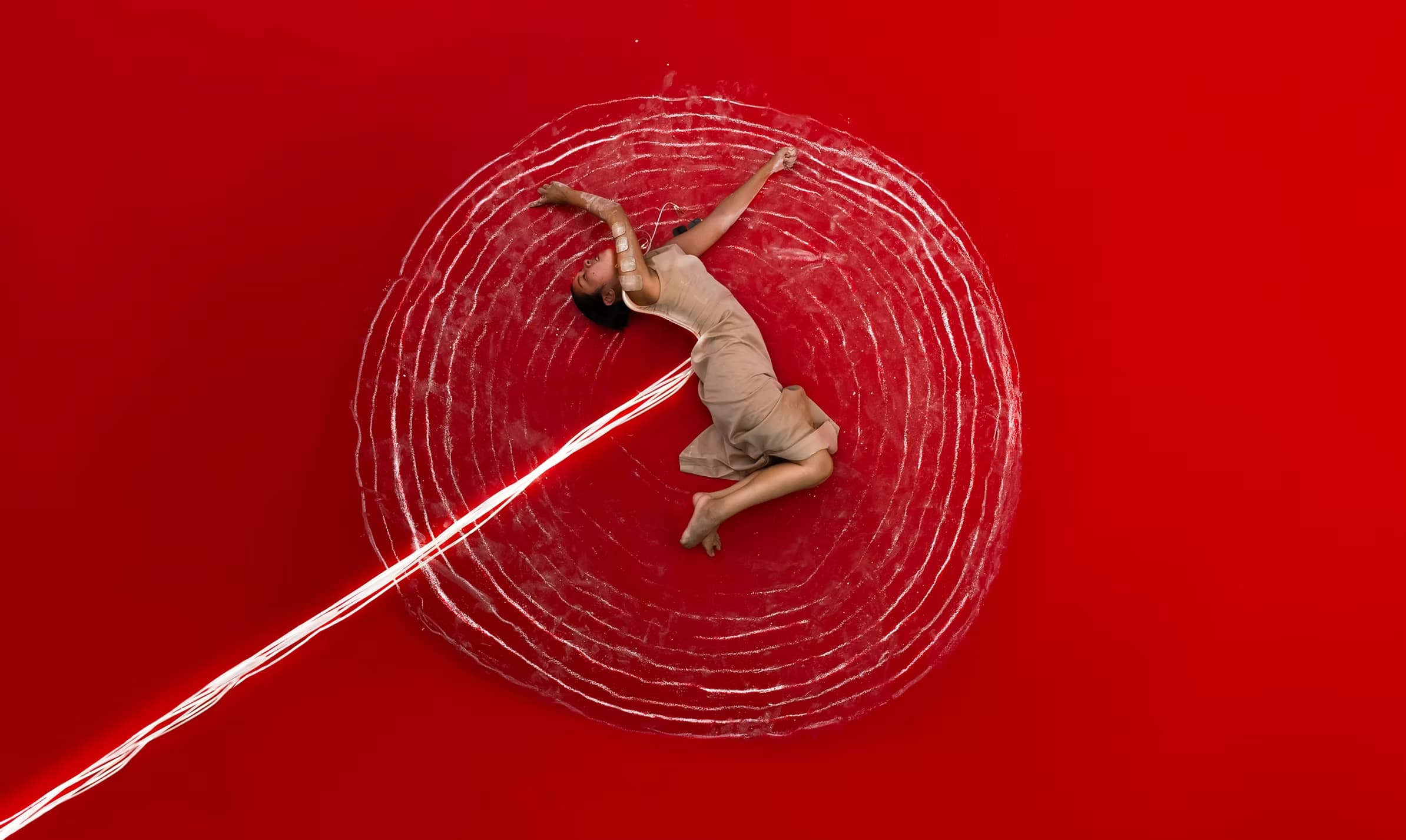
Not particularly, but it’s true that, say, in my recent series, Cyber Labour, the focus is more on questioning the essence of our humanity rather than solely on feminism. In my latest work, The Machine Ghost and the Human Shell (2024), which explores what remains within our ghost and soul when algorithms guide and manipulate our daily lives, are we still “us”? It poses universal questions about existence — regardless of gender.
I guess it’s the way I utilise my body in the performance videos, along with the trajectory of my artistic career, that intertwines with feminist themes, leading to the attribution of the feminist artist label. But once again, it doesn’t really bother me because, like we just discussed, initially, I set out to confront the taboo of femininity in my series Tools, and this parallel was sort of carried on in my later series as well. When scrutinising industries within a capitalist framework, of course, women are often paid less and treated unequally, compared with their male counterparts in the workplace. So yes, there are scales of injustice present in many of my works, reflecting the challenges women face in the world today.
Afterwards, I created another series called Performing Textiles, which addresses the ongoing exploitation of female garment workers within the industry. So I guess it’s reasonable to interpret these series as feminist works. Oh, today happens to be International Women’s Day — seems like the perfect time to talk about this!
AW: Indeed, happy International Women’s Day! Just thought I’d ask, why don’t you hire actors or actresses for your performance? Since a lot of what you do in them involves physically demanding tasks, some are quite extreme, I must say.
KV: I want to know what it feels like to be objectified, though it’s undeniable that many people already see themselves as mere objects in the capitalist world’s relentless pursuit of profit, we are like cogs in this money-making machinery.
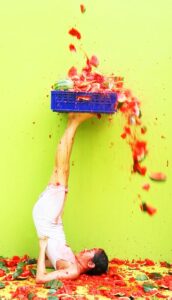
On the other hand, physically, I also want to know what it’s like to be mechanised by society, particularly for labourers. So I must undergo the whole experience myself. I recall a moment during my performance, when I had, almost like an epiphany — as I approached the point of becoming something like a machine, I entered a state of numbness, where sensations just began to fade away. I believe this is how the system deceives our brain into believing that this is normal. Our bodies and minds possess a remarkably magical ability to adapt to any circumstance, even those that dehumanise us.
Maybe I’ve shared this story with you before, but it’s like the analogy of the frog placed in a pot of water. If the water is already boiling, the frog instinctively avoids jumping in. However, if you place the frog in still water at room temperature and gradually increase the heat, the frog’s body adjusts to the changing temperature until it’s too late to grasp the danger, ultimately leading to its death. Similarly, in my performance, I undergo a process of dehumanisation, I transform myself into an object, stripping away my humanity.
I suppose this is how, during that transformation, when I enter the performance as a human being, after experiencing pain for a while, I slowly get used to it. Eventually, the body tricks me into believing that I can endure even more pain, transitioning into a numb state where I just no longer feel what I’m supposed to feel. And I guess that’s how society deceives people, once again — it establishes a new norm, convincing individuals that since everyone else is doing it, why shouldn’t they? It creates the notion that deviating from this norm is unacceptable. By speaking out against it, you’re essentially challenging this norm and saying, “Hey, this is boiling water, it’s not right, and it should never be the norm.”
AW: Just as you are often labelled a feminist artist, you are also labelled a Thai artist. In a lot of your past interviews that I read, many of the questions can’t seem to divert away from your ethnic background. Have you become more comfortable with this over the years?
KV: I don’t believe in categorising based on nationality. When we start dividing or categorising, creating an “us versus them”, we set the stage for conflict, don’t we? This divisive thinking, often leads to a lot of troubles in the world. I personally like the idea of somewhat of a cloud country. I genuinely believe that viewing ourselves as part of a collective whole would foster greater empathy and unity.
On the other hand, I don’t really have a problem being referred to as a Thai artist, essentially, it’s my background, and my work often reflects the cultural influence, drawing from my experiences and stories from this country. Nevertheless, I believe that as a society, we shouldn’t feel compelled to constantly divide ourselves along national lines.
AW: Kawita, you were born into a family of lawyers and judges. You went to Melbourne at a very young age. Obviously, you didn’t choose which family to be born into, however, that put you in a relatively privileged and comfortable seat compared with many people in Thailand. Would you agree?
KV: Yes, I think that’s fair.
AW: Have you ever been challenged by anyone who perhaps comes from a lesser background, when the person sees your work and says, “Kawita, you don’t know what it’s like being one of us?”
KV: Yes, actually, all the time, to be honest.
AW: What would they say?
KV: Exactly what you just said, that I would never truly understand or relate, and that I’m only creating content for my own benefit, you know, stuff like that.
AW: How would you confront these statements?
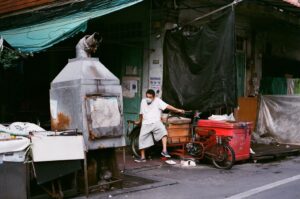
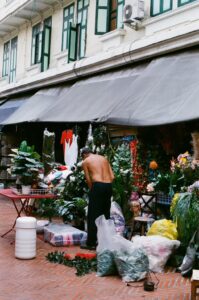
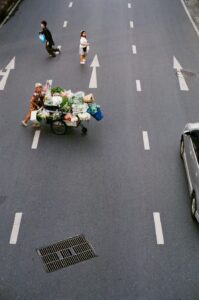
KV: Well, I try to address them via interviews. In Thailand, inequality is like a scar, a wound that never truly heals. If you scratch it, the wound reopens — for many, many reasons. Factors such as government actions, policies, and our capitalist system exacerbate this divide, where the rich always get richer while the poor get poorer. Those at the bottom of the social hierarchy, the labourers, are the ones who would always suffer. For the younger generation, breaking into established sectors proves extremely difficult as existing empires monopolise both wealth and power, perpetuating a vicious cycle of inequality.
So, I do understand why people pose such statements, they see me as someone positioned above them, atop the societal pyramid, perhaps exploiting them both knowingly and unwittingly. By claiming that I’m on their side seems like a lie to them because they are still struggling every day. However, I am not part of any empire, nor am I exceptionally wealthy. (laughs) The truth is, as an artist from the middle class, I feel that this segment of society is shrinking due to the widening gap of inequality. In turn, it leads to a breakdown of understanding among societal tiers here — how can the rich grasp the struggles of the poor? Bridging this gap requires the intervention of the middle class, the ones who are educated, to mediate, and to facilitate understanding. Even though the middle class is shrinking, I still see it as my responsibility to communicate with these disparate groups. To say that, hey look, even though I may not comprehend you entirely, I want your stories to be heard.
In many ways, I am a content creator, but I would only do what I think is right. I don’t go out and portray myself as a victim of societal injustices because I’m not, but if artists don’t step up as communicators, who will? In that sense, I consider my work vital as it bridges and intertwines disparate worlds. Obviously, it’s a massive challenge, but the aspiration is probably like a dream for me as an artist.
AW: That’s very admirable and brave, to carry that sort of responsibility on your shoulders.
KV: It comes back to what I mentioned earlier about the dangers of categorisation. If you’re privileged, society may label you as the antagonist, you are seen as incapable of understanding or advocating for positive change, because you’re the “bad guy.” On the other hand, individuals perceived as lower in the hierarchy may feel that their voices are always muted or overlooked, as their experiences are often dismissed due to their perceived oppression. If our society continues to view individuals through such narrow lenses, how are we ever going to move forward?
AW: Marina Abramovic, who has been a massive, massive influence for you. Would love to hear about your encounter. How was it like meeting her?
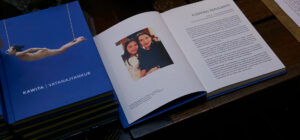
KV: Marina has a close relationship with the Bangkok Art Biennale (BAB) Foundation’s artistic director, Apinan Poshyananda, they have known each other for perhaps 20 or 30 years. I had the opportunity to meet Marina during a show I had in Venice with the BAB back in 2017, and Apinan introduced us at the dinner table. We sat next to each other and just started talking, I showed Marina some of my work, and she was very supportive of the direction that I was taking and encouraged me to be more fearless!
AW: That must be terrifying, showing your work to Marina Abramovic.
KV: Surprisingly, it wasn’t, Marina wasn’t intimidating at all! It was all very relaxed and casual. She offered me advice on my performance, suggesting that I become more self-aware and meditate to enhance my presence, which she emphasised as crucial for longer performances.
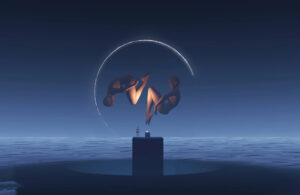
AW: Kawita, you’ve ventured into AI in recent years. Is there a reason behind it?
KV: It all started with Voidscape (2022), which is more of a VR project commissioned by Central Department Store, one of Thailand’s corporate giants. They approached me to work together, but I made it clear that I couldn’t promote or celebrate Central as a brand. As an artist, my focus is on critiquing the capitalist system, not endorsing it. Instead, I proposed a project that would question the ethics of consumerism, raising awareness among Central’s customers about the dangers of being unaware of what they are buying.
During the research phase, I heard many customers saying things like, “Labourers are going to be replaced by machines anyway, why should we care about them in the future?” This was totally a wake-up call for me, and I just recognised the urgency of addressing not only present issues, but also future possibilities. Consider this: we’re all here within this capitalist pyramid, with the rich at the top, followed by the middle class, and the labourers at the very bottom. When machines start replacing labourers, where do they go? They can’t just vanish from the pyramid, right? That’s what I wanted to talk about — the transition stage of labourers being replaced by machines and AI.
That’s how the question of AI came about, and this was back in 2019, 2020. The project is a collaboration between Cyrus James Khan and me, a game developer who’s very much interested in cyborgs and robots. I was also introduced to Pat Pataranutaporn from MIT Media Lab, an AI and cyborg specialist. When I asked Pat about the future of labourers, he outlined three theories.
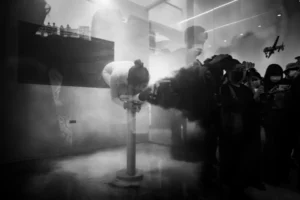
The first theory is quite utopian, imagining a future where everyone is just super happy, as robots take on the majority of labour and production tasks. This would free humans to pursue their passions — painting, poetry, anything — rather than being tied to undesirable tasks.
Another theory is the dystopian perspective, as explained in Martin Ford’s book, Rise of the Robots: Technology and the Threat of a Jobless Future. This scenario is quite bleak, portraying a world where robots and machines replace humans in the workforce, leading to widespread unemployment and financial instability. As a consequence, individuals might become marginalised from society, potentially resorting to virtual realities or gaming as a means of survival.
Finally, there exists a scenario of coexistence between AI and humans.
AW: A symbiosis.
KV: Exactly. It’s a world where AI can enhance human creativity by assisting with various tasks. Coming back to Voidscape, the work presents a dystopian vision where rampant human consumption has led to environmental destruction, leaving no habitable spaces. In this future, labourers are forced to undergo cybernetic enhancements and merge with machines, becoming cyborgs to meet the demands of mass production or to repair damaged ecosystems.
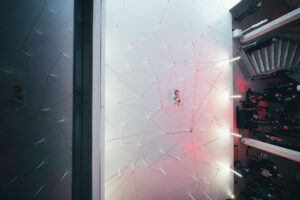
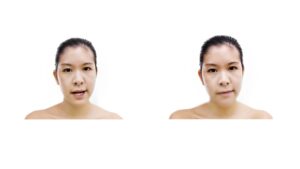
AW: Afterwards, you did another work with Pat titled: Mental Machine: Labor in the Self Economy. The images look phenomenal. I wish I could see it in person. Can you tell us about the idea behind the piece?
KV: We question the existence of AI and how it challenges our perceptions of reality. We all tend to divide the world into black and white, either upholding the current capitalist system as a necessary good evil or advocating for its destruction and complete overthrow, so this is like extreme left and right, isn’t it? Both of them firmly believe they are correct, and this debate was visualised and presented via two AIs that we created respectively.
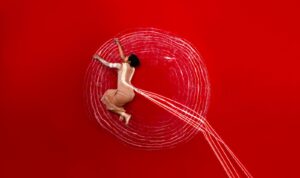
As you can see from some of the photos, I was also performing live as part of the exhibition. It took place at the Art Gallery of Western Australia in Perth, and the performance took centre stage, covering the entire floor of the museum. There were all these poles connected with each other using threads, where every pole represented an industry and if you looked at it from a bird’s-eye view, you would see a sprawling network representing Southeast Asian capitalism.
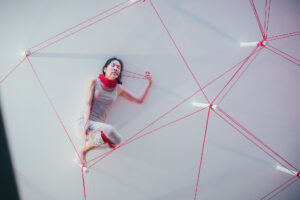
Trapped within this web, I, a human being, faced a pivotal choice: to either perpetuate like one of the two AIs who believes in the system, or I could untangle every thread, and break free from the cycle of repetitive labour, and escape this ensnaring trap. During my live performance, I was struggling between the contrasting meanings of these two mindsets. At one point, I untangled every thread and found myself in a void of emptiness — I had no work to do, I was just lying still. But then the question arose: Is this the true meaning of the word “freedom”? When I sat in a void, everything that I had once been programmed to value in life completely vanished. I felt like I was nothing. Does this absence of solid structures define true freedom?
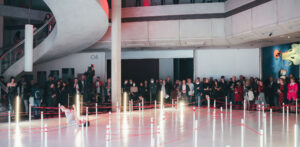
In response, I gradually began to weave my own structures, deviating from the old structure of the capitalist network. But soon, I found myself trapped once again within the confines of this so-called new structure that I had created myself.
I haven’t found a definitive answer for that experiment yet, but I think this is where we are as human beings. How do we escape from this failing and broken system? Even if we manage to get out, it carries the risks of uncertainty and instability. Would we be willing to risk chaos and anarchy if no one were governing us? In that sense, this work no longer concerns female labourers alone, but rather the broader implications of our socioeconomic structure and the future of labour in a post-capitalist society.
AW: The three scenarios you mentioned: utopia, dystopia, and symbiosis. For yourself personally, which one are you leaning more towards?
KV: Symbiosis. Keeping a positive mindset is important for artists, I think. (laughs)
AW: You mentioned The Machine Ghost in the Human Shell earlier. I understand that the work is yet to be premiered. Would you mind sharing a few words about it at this stage?
KV: It’s a new performance/video premiering in November this year at the Asia Pacific Triennial. At first glance, it might seem like we’re against the idea and existence of AI, as we raise questions about how it manipulates and influences our thoughts, to the extent that we question what remains of our humanity, our very souls. But in fact, our stance is quite the opposite. We believe in the potential of the technology, and we envision it as a tool for enhancing our coexistence in its best form.
Have you seen the anime Ghost in the Shell? There’s a scene where the protagonist, Motoko Kusanagi (草薙素子), ponders her existence, referencing René Descartes: “I think, therefore I am.” With her own memories and capacity for independent thought, she asks things like, “If she can think and have her own ideas, does that mean she exists on par with humans?”
In the anime, there’s another theory suggesting that mere thought doesn’t necessarily signify or confirm our existence. According to this theory, genuine human essence and thinking processes stem from the complexity of ideas. This complexity, as Carl Jung posited, arises from our life experiences, environment, and biological senses. Thus, our physical embodiment is essential for the formation of these ideas, which encompass emotions, feelings, memories, and more. These complexities form our thoughts and ultimately define our existence.
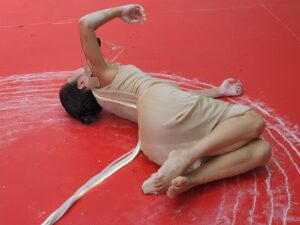
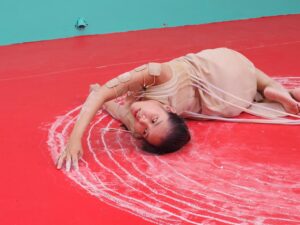
But what I have in mind is this: what if our life experiences are constantly being invaded or manipulated? Take our childhood memories, for instance, the experiences we had while playing in the playground with friends, whereas children these days inhabit the Metaverse, they engage with friends and even AI in virtual gaming worlds. This fundamentally alters their childhood memories, experiences, and environment, as they’re no longer living in the physical world but rather in a virtual world.
Our souls influence our complexities, intertwined with our karma, shaping our existence and everything that we experience in life. Yet, if our complexities are subject to shift, does our soul remain unchanged? Are we still the same soul? Regardless of the reality of souls, one thing undeniable is that our complexities will be altered and our ghosts will be affected, and I believe this is happening already, hence the title of the work: The Machine Ghost in the Human Shell — it’s somewhat the inverse of our usual discussions about our souls being human, while we find ourselves inhabiting physical bodies made of flesh and other biomechatronics, technological or artificial components.
AW: Final question, where would your utopia be, Kawita?
KV: You know what, my utopia is both everywhere and nowhere. I feel like I kind of live within my own city, a city of the mind, where I find happiness each day and immerse myself in my work. Perhaps that’s why I feel like I could just live anywhere, and geography is not something that I consider specifically. I’m constantly on the move, whether it’s in Europe this month, Australia the next, or perhaps Indonesia or Taiwan after that. That’s pretty much how my life is at the moment: living in my own cloud country, actively bridging worlds and fostering communication!
AW: Thank you so much for your time, Kawita. All the best with your exhibition at the upcoming Asia Pacific Triennial!
KV: Thank you so much!
Credits
Editor: Axel Wang
Photography: Courtesy of Kawita Vatanajyankur