
The Summer Before the Dark
AXEL WANG:
This final part of the interview is going to be a bit personal. You mentioned that when you moved from Liverpool to Brighton, it was career suicide.
JOANNA ROSENFELD:
Yeah (laughs).
AW: I guess it would be fair to say that you chose love over career.
JR: I did at the time.
AW: And that was 20, 30-odd years ago, right? Obviously now your kids have all grown up, and we are sitting here in Tokyo having this chat. Looking back, would you have made that same choice?
JR: Yeah, I think so. Even though it was career suicide at that point, as a creative you could also call it an incubation. I had to find different ways of creating, and I learnt so much. I was given the opportunity to grow a lot of my practice in a very small, contained way, which I’ve now outgrown. There were elements of my practice at the time that were more like seeds. And I grew a lot of that practice within the environment of being part of a family, having children and being a caregiver. The experience of being a mother, is crucial to how I see my relationship with the audience now.
I think it really allowed me to understand something about the human condition which I didn’t know before. And I mean the heartbreak of it all ’cause our journey wasn’t easy. We have a child with neurodivergence and there was a lot of drama (laughs), and a lot of sacrifice. But it made me so grateful, and it makes me grateful for what I can do now.
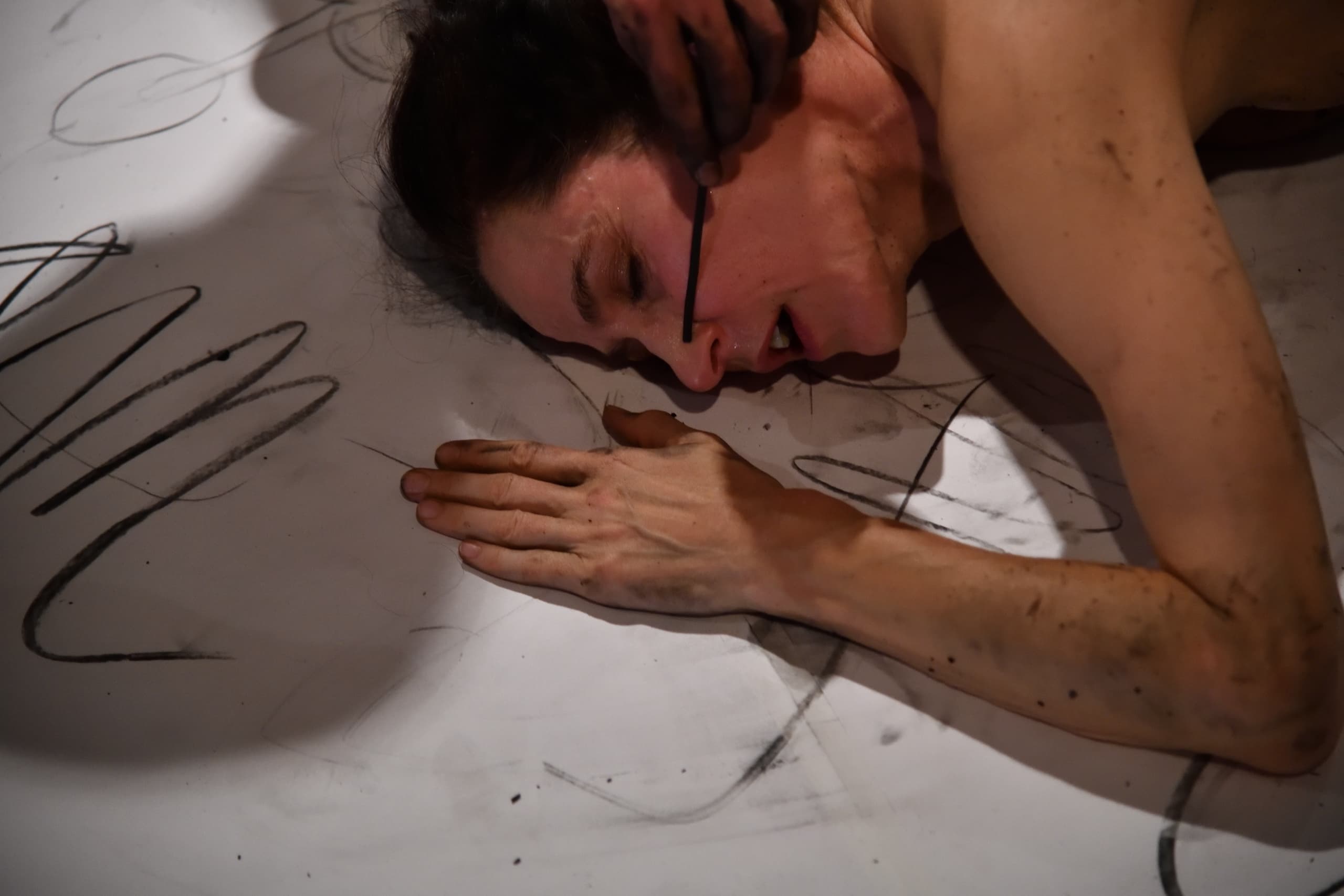
I think when I make a piece, even if it’s a personal piece like the one you saw (Memoria, 2025), I have a question that I start with, but then I do ask myself, “Why am I making this? What is the benefit for the viewer, the participant?” So for me, Memoria, for example, is about how we deal with grief, which we don’t do very well in the West.
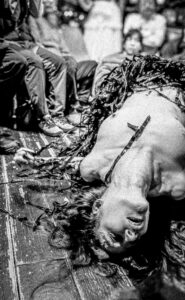
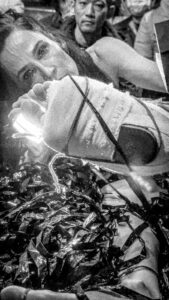
I think in Japan it’s slightly different. People have photographs and little altars for those who have died. They talk to them and respect them; they might even say hello and goodbye to them every day before they leave for work. So the dead are somehow integrated into everyday life. But then there’s the question of what to do with their belongings, and that can still become a burden.
My father, when my brother died, was given two weeks of leave from work, and then was expected to go back as if nothing had happened. I don’t know how you deal with that, in a society where you can’t talk about loss.
Germany, England and Japan — China, maybe, is the opposite — all have very different relationships with what we keep, what we let go of, and what we rebuild after things are destroyed. Memoria is about all of that. What do we make with the past? Do we make anything with it? Is there a point to it? Does it swallow us up? Is it better if we walk away? I don’t know. I have no answer.
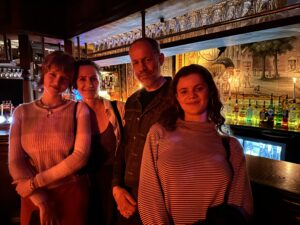
AW: If we think of parenting as a job or a project, do you think you’ve managed to do it well so far?
JR: Yes, I think so.
“It’s not about peace.”
AW: From what you shared before, it sounds like you and your daughters have a rather healthy relationship, built on mutual respect and love that flows both ways. You don’t really see that as much, especially in a lot of East Asian families, where parenting often focuses more on directing children’s lives. But you and your daughters seem to have a relationship that’s more, independent — maybe that’s the right word.
JR: Well, there are different styles of parenting. I wouldn’t judge anybody else’s style as better or worse. I was taught to parent by my oldest daughter, who has ADHD. Well, firstly, the parenting I received from my parents may echo some aspects of that East Asian style of parenting.
My father, for example, was really interested in biology and loved animals, but his father was an architect, so he became an architect.
There are also stories about my aunt, my father’s older sister, who wanted to be a tailor. And my grandfather absolutely refused, he thought it was beneath her. When my father met my mother, who didn’t quite fit into the idea of who he should marry, my grandparents disinherited him. They tried to pressure him financially to make a different choice — unsuccessfully — and eventually, they changed their minds and my father was reintegrated into the family.
But that kind of “You’re gonna do what we want you to do” is also part of our culture. I think maybe because my father had those experiences, he tried to parent in a different way.
In Germany, the ’68 generation is something we talk about. They’re sort of the baby boomers who were born around the end of or just after the Second World War, and who, during the Summer of Love1, did quite a lot of proper rebelling. There were student protests, a lot of unrest and many people died. I think there was an echo here in Japan as well with the student revolts and demonstrations.
So my parents were part of that generation, but there was no knowledge about what to do instead of this kind of parenting. My parents would flip from complete negligence to a totalitarian patriarchal structure. Sort of, “We don’t look at you at all, and now you need to perform and get 100% at school. But now we don’t look at you at all.” That’s how I was parented, and I found it very difficult.
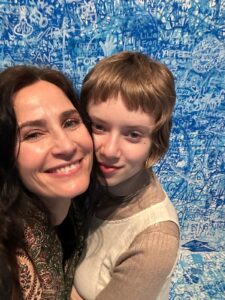
And then we had our daughter, who is incredible — such a fabulous human being, talented, sensitive and insightful — but couldn’t be in a room with more than ten people without freaking out. She couldn’t be apart from me for the first three years of her life without melting down.
To try and manage that, I learnt so much from her. And so I discovered attachment theory, which puts the child at the centre, knowing what they need and communicating what they need. And by enabling that communication to be heard, independence grows.
So we decided to use that parenting style, which meant a lot of involvement in the early years, and hence (laughs) the career suicide. I suppose I don’t do things by half, and I wanted to go all the way with parenting.
And then we transformed from being sort of a teacher, guide, to being more of a consultant when the child grew older. That was very difficult because I had very much identified with being a mother. In fact, un-mothering myself has been an important part of the last five years, sort of going, “Okay, well, I don’t have that same role to fulfil anymore, so I need to let go of the identities I’ve built around being available, doing the laundry, or having special time with the children.” Stepping back, listening to them and really seeing their talents — that’s something I feel very fortunate to have learnt. And I think that’s maybe the biggest gift.
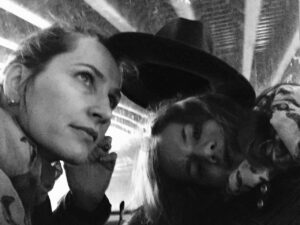
My youngest daughter is now applying to study music at university. I’ve seen her talent in music all her life. I took her to Suzuki Method violin lessons when she was two, which is very parent-involved, and I encouraged her as much as I could. I even asked her music teacher to organise some conducting because I could see that she had an understanding of how an orchestra works — she didn’t know this.
So behind the scenes, I was always helping to curate experiences for her that would allow her to grow in confidence, because I could see she had the talent. Whether she would pick it up as a career, I didn’t know, but I could see it was something she loved. I’m delighted that she’s choosing it now.
When she chose her A-levels, I insisted that she have an essay-based subject because she might want to go to university, even though she was so convinced she would go to drama school instead. So she chose politics and now she wants to study music at university, and she needed that subject. That’s what I mean by looking at things from a longer view: this is what your talents and interests are right now, but let’s not close doors. Let’s keep them open so you can make different choices when you’re older. You might change your mind, circumstances might change.
AW: So while they were growing up, you were still quite involved in some of their decisions. How did you decide when to insist on something and when to let them make their own choices?
JR: Well, there were certain things, like ballet. The older one wanted to stop, and I said, “That’s fine, but you have to finish the term because we paid for it.” So you can’t (snaps fingers), on the spur of the moment and just change your mind.
With music, specifically violin, there was a point when both of them wanted to stop, just as they were ready to start playing in orchestras. I didn’t let them because they’d invested so much time, and I wanted them to have a go at the orchestra for a year. If they still didn’t want to do it afterwards, then they could stop. Because I was part of it too — I was always in class — they knew my time was invested as well, so they agreed.
And, of course, once they were with friends and started making relationships in the orchestra, they didn’t want to stop (laughs). But they had the option, right? There was always a reason, and the reason was: “You’ve worked so hard. This is the reward for that work. Please experience it first. Taste what it’s like to be in a Mahler symphony playing second violin.” (laughs) It’s fascinating, wonderful. What an experience.
I think the motivation is different, because I wanted them to experience something, not just do what I wanted… It’s not about peace.

AW: You mean peace between you and your daughters?
JR: Peace between us or peace in life — it’s not about that. In my experience, there are two ways of parenting that are really about peace. One is when parents take complete control and expect their children to do what they say: “I know more, I understand more about the world, so you need to accept my knowledge and not contradict me.” It’s about keeping the peace.
And then there’s the other way: “I want peace, so do whatever you like. I don’t care.” (laughs) For me, that’s not the point either, because peace doesn’t necessarily mean engagement or connection.
“I think our mortality is our gift.”
AW: Lastly, there are no questions here, but we talked about death during our last session, and lately, it’s been on my mind a lot. I remember listening to a podcast where Ricky Gervais compared life to a queue leading to a cliff. He was paraphrasing someone else I think, but anyway, he said something like: in your twenties, you’re at the back of this queue — laughing with friends, feeling invincible. But as you reach your forties, you start seeing people ahead of you fall, and it hits you: one day, it’ll be your turn too.
I think I’m in that phase now. Ten years ago, people around me were getting married and having kids, but now, some people my age are actually dying.
I used to see ageing as this beautiful metamorphosis, experience, wisdom, and perspective. But now, approaching forty, I’m just not really sure anymore, I think people call this a midlife crisis (laughs). I don’t think I’m in a shitty phase, probably more of a curious, introspective one. I feel like I’m relearning myself, trying to understand what this next stage of life means.
JR: Well, first of all, I don’t have that privilege, the privilege of innocence, never had that privilege of thinking death only comes to the old. I never felt like life was orderly. You imagine a meteor shower could just take out anyone. One of the Marvel films has that, right? Half of the population just disappears.
In fact, maybe that’s why I’m a performance artist or an artist in the first place, the awareness of our mortality, makes me question why we exist.
Naive in many ways, but definitely not around that subject of death. But, you see, I think our mortality is our gift. I think becoming aware of our mortality means we can make choices that aren’t defined by culture or pressure, but by our true desires. If I’m aware that I might die tomorrow or next year, how do I want to spend that time? Do I really want to do what my parents have suggested, or what is expected of me? And if I do, great, then I can do that full-heartedly. But if I don’t, it might give me the courage to do what I really want to do.
I think that’s such a gift, to be able to alter our behaviour according to an awareness of the finite nature of our existence. It might be that I want to be remembered as the most benevolent person on the planet, or I might just wanna fuck as many people as I can, or taste as many flavours as possible. It could be a very selfish, insular reason, or an incredibly generous one, whatever that motivation is, I think it’s a gift, and we need to harness it.
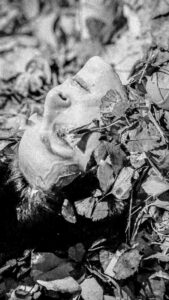
I think you’re in a really exciting place where you’re becoming aware of your mortality. It gives us an opportunity to go, “Okay, this is not enough. What does touch me? What makes my heart go…?” (mimics sound of heart beating).
I really think our mortality is a gift. I said something on Saturdays to someone which, we tried to translate but couldn’t: the tragedy of humans is that we have hearts that can break, the gift of humans is that we have hearts that can break.
AW: I think that’s a beautiful wrap.
Footnotes
1. The “Summer of Love” refers to the cultural and countercultural movement that emerged in San Francisco in 1967, particularly around the Haight-Ashbury district, bringing together artists, musicians, activists, and young people associated with the hippie movement.
Credits
Editor: Axel Wang
Photography: Courtesy of Joanna Rosenfeld