
What’s Real
AXEL WANG:
What would you call yourself on a business card?
JINHUI WANG:
If I had a business card? I guess the point of having a business card is so that people can easily understand what you do.
AW: Exactly.
JW: I would just say artist. Definitely not a photographer — that would be very misleading. If the person wants to know more, I’m always here.
“This has always been my interest, exploring what is real, or what we believe is real,
versus what is not real. Like, how do we define this boundary?”
AW: Here comes a very stupid question: What are your artistic inspirations? I somewhat sensed a bit of Kubrick in your work.
JW: 2001: A Space Odyssey (1968) is one of my all-time favourites. I like the fact that, there’re so many different layers to it, and the fact that nothing is explained overtly. It’s a timeless masterpiece that tells a story about cycles, about us, human beings. It reflects on our very existence — we exist, we rise, we fall, and then we start all over again — a cycle we can never break out of, from the micro to the macro. To me, that’s also what’s amazing about us as human beings. This cycle is beyond time and space, it’s the cause and the result of everything, and we never give up.
I’m inspired by different aspects of different people really. I love the works of Nam June Paik, for the playfulness and for how he used so-called technology as an element in his sculptures. Jean Baudrillard probably speaks to me the most, the author of Simulacra & Simulation (1981), which in turn inspired the Matrix movie series.
What Baudrillard talked about in the book was basically — OK, I’m going to try to summarise it — to conceal is to pretend not to have what we have, and to simulate is to pretend to have what we do not have. Baudrillard believed that simulation questions the difference between the real and the unreal, whereas a simulacrum is something, that doesn’t need to be justified by anything other than itself, like God. There is always a manipulator in a simulation, but what if the manipulator itself is a simulacrum? We then enter a loop of questioning what is real and what is not, and it might just be easier to stop this binary logic and accept the fact that we actually live in a hybrid state. The Matrix references a lot of Baudrillard, from what I understand.
AW: Are you excited about the 4th Matrix film?
JW: I don’t know, I didn’t like the last one. The first one (The Matrix, 1999) is the best for me personally, because it corresponded with Baudrillard’s theories, the second (The Matrix Reloaded, 2003) and the third (The Matrix Revolutions, 2003) felt more like continuations without introducing anything new, it turned into a warfare of who wins and who loses.
AW: Human vs. machine.
JW: Yes, then it became binary. Anyway, coming back to artists! There’s a piece created by Claes Oldenburg, the sculptor, in 1963 called Bedroom Ensemble. It’s shown at the National Gallery of Canada in Ottawa. It’s essentially a set of beds, as the name suggests. The whole piece looks like a motel or hotel room, with a variety of objects physically sitting here and there.
I remember when I saw it for the first time, I had absolutely zero clue what was special about this bedroom-lookalike setup. But if you open your eyes wide and look closely, you notice that the corners of the bed frame are not 90 degrees, everything else is constructed in a geometrically and optically false way on purpose. Without going into too much detail, for me, the piece created this illusion as if you were looking through the lens of a camera, it felt real due to the presence of the objects, but weirdly unreal at the same time because everything is distorted and warped. This has always been my interest, exploring what is real, or what we believe is real, versus what is not real. Like, how do we define this boundary?
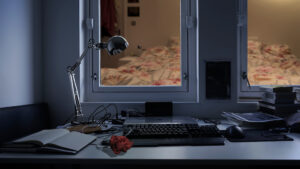
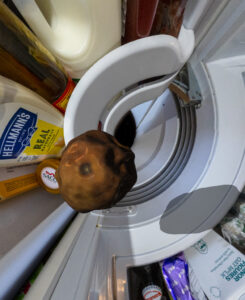
AW: You started experimenting with digital media during the pandemic. When I spoke with you for the first time, I was telling you that I felt this medium still feels very much beyond me. How would you explain what digital art is to me, and why I should care about it?
JW: Maybe I could ask you the same question: What is art? It really is a question that would spark different responses from different people, I guess. In fact, I really enjoy the work of Arthur Danto’s recently, he was a philosopher and a professor at Columbia University, and he published a book called What Art Is (2013), where he wrote about this whole debate, especially following the modern art movement, people arguing whether art was dead, or art had become something else, what’s art and what’s not, there are simply different points of view.
The same goes for digital art. It’s like old-fashioned journalism versus digital journalism, old-school accounting versus digital accounting, the whole technology/digital revolution has affected pretty much every field.
My generation, we practically grew up holding a mouse in our hand, obviously pens too, we still write, but when you start using computers from a young age, it becomes second nature. Learning to use a mouse for us is somewhat like learning to write with a pen in the past. Sure, the computer language is a whole different system, a binary one with a different logic behind it, and it took a while for humans to adapt. We’ve now reached a phase where, all these movements, this (gesturing taking photos with a phone), and this (gesturing taking a selfie holding a phone in one hand), all these hand movements — they are so widely adopted, so common, ingrained even, they have already become second nature for us, just like people with pens in the past.
The digital medium has become part of our lives and part of our reality. Digital art for me is merely another medium that emerges with the progression of technology. Every medium has its limitations, of course, just like painting using brushes on a certain-sized canvas, digital art, for me right now, is extremely confined to displays or screens, high resolution is often a must, so they are more likely to be on the pricey side.
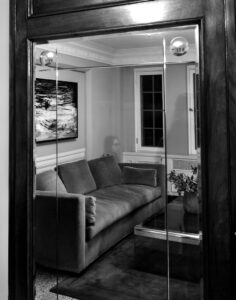
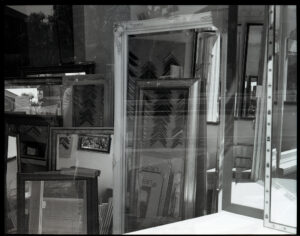
AW: What do you make of the digital frenzy these days?
JW: I’d refer back to Baudrillard once more. He’s not a man of our time, but he talked about consumerism, pop culture, television and proposed that, in a way, it’s all simulations — and I agree, it’s a loop! Like, we believe we buy avocados because we actually want to eat them, not because of a healthy-food commercial we once saw. Likewise, with selfies, we subconsciously pose instead of genuinely documenting life; this manipulates our everyday actions and changes how we behave in real life.
If we can even call that “real life,” because if everyone starts doing things and living online, that itself becomes real life, right —a simulation of another reality. I suppose most of us live in contradictions because we are influenced all the time. Humans are such fascinating animals, like we are so contradictory, so cynical, yet we are kind, all at once.
Jean-Paul Sartre once said that to prove we exist, we make decisions and take full responsibility for them — becoming our own “gods.” That feels a little contradictory to me, because the way we dress, how we talk, the things we eat, even the smallest details in intimate relationships, we often mimic one another or imitate characters from films. So much of it happens subconsciously. It’s neither good nor bad, I think — it’s just there.
The digital medium is not necessarily evil either, it’s not that binary at all. I honestly feel that it’s overly simplistic to just label something as entirely bad, and we should never have it in our lives. Like, The Matrix is paradigmatic, eventually it became this big battle between the good guys, who are trying to save the real world, versus the bad ones, the agents, the big manipulator behind, which is one of the main reasons why I didn’t enjoy it because it’s just all too binary.
According to Jean Baudrillard, we may already be living in a kind of Matrix-like simulation, yet people still fantasise about someone manipulating us from above. In reality, we are probably our own manipulators — we create our own simulations and then live within them. Once again, it becomes an endless loop, a circle that never quite closes.
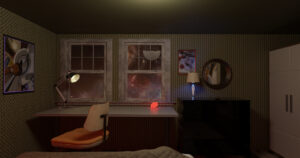
This is what inspired me to create Space Travel (2021). I’m still learning this digital language and trying to make sense of it myself. My work is digital because it felt like the most suitable medium for the questions I wanted to raise and what I wanted to express. At the same time, it also seemed like an area that hasn’t been discussed enough, for many people, it’s still relatively new and even a bit bizarre. But it is our new reality. I personally don’t think technology or the digital is as evil as some make it out to be, it’s just another canvas.
AW: And NFTs, do you reckon it’s turning digital art into something else?
JW: NFTs are valuable in that they bring a more diverse audience to art, and in that sense, they’ve given rise to a different form of artistic practice. This isn’t strictly about NFTs, but it’s probably relevant in this context: a creator’s work reflects who they are, and there is usually a clear sense of purpose or meaning behind it. However, when that intention becomes primarily driven by money, and creators begin attaching price tags to their work — not that I’m against artists living off their art — things start to shift.
In the NFTs space, prices can go insanely high, often not because of the intrinsic value of the work, but due to opportunistic financial motivations. Investors rush into this quick money grab — and I’d rather not get into the debate over what defines the value of art — but this phenomenon creates a problem. Because when I said NFTs bring in a wider audience, many of these new audiences — speaking from my own experience — don’t really give a shit about the art itself.
Everything moves so quickly that no one has the time, or perhaps the inclination, to sit down with the work and think. Alongside the whole crypto hype, many are only in it for fast money and nothing else. When prices become absurdly high, people go high! That’s likely why NFTs are discussed so much now — because of the scale of money involved, which ostensibly makes them seem relevant and important. But at that point, it’s not really about the art anymore.
AW: Like a stock.
JW: Finance in the form of art.
“…I’m used to people seeing me differently and asking questions.”
AW: It’s hard not to bring up the pandemic, especially since you are from Wuhan (武汉), China. For the past couple of years, the city has faced a lot of stigmas. How have you been handling everything?
JW: I was already in London when the whole thing went down. There were some racially related incidents, only some, like, they were saying things about Chinese eating pangolins or whatnot. It’s not really the first time that I have been asked these sorts of stereotypical questions, bordering on offensive. The few times that it did happen, I guess people were not actually intending to be offensive, they probably asked because they’d never really stepped outside their comfort zones. Most of the time, they’re not really expecting any answers since they already have one in mind. I tend to just completely ignore this group, because there’s no real point in continuing the conversation.
I guess I’m not that sensitive to it anymore. I’ve been to a lot of places, and I’m used to people seeing me differently and asking questions. I’d say I usually deal with it pretty well. Over the past year, “Wuhan” has been getting a lot of attention, just like you said, eyebrows would raise whenever I mentioned where I’m from: “Have you ever been to the lab?” “Is the lab real?” “Do you really eat bats?” — There are all sorts really. Maybe people think they are being interesting and funny, but I usually throw in a bit of repartee and turn the joke back on them. Sometimes it’s better not to take it too seriously.
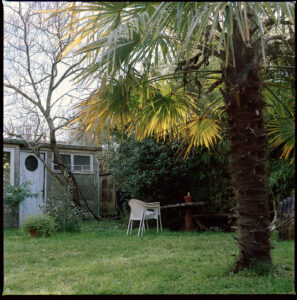
AW: Let’s explore some alternatives here. In a way, the pandemic has pushed people out of cities and back to nature, though for someone like you who has just started piecing together a life in London, you can’t simply abandon everything and move up to some mountains in Scotland, but is that something you might consider one day? Practise your art somewhere else outside of a city?
JW: Oh, definitely. Probably nothing long-term, though. I wouldn’t be able to just completely give up city life yet. I love people, and frankly, I’m concerned about issues, which is a big part of what keeps me going every day. And a lot of these issues, they only become visible through interaction with other people.
For thousands of years, humans have built cities and invented tools — almost everything we do today comes down to them, which is quite amazing. So I definitely don’t see myself going primitive, living in a cave without any of these tools, that just feels backwards, really. At the same time, the pandemic made me realise how much we’ve all missed nature, especially after I moved away from Canada.
In cities like New York, London, or Shanghai, things are moving so fast, too fast. And with the pandemic, it’s been one thing right after another. There’s barely any room to slow down and reflect, people rush into decisions, and we all end up in these conundrums. When things grow into something that overwhelming, like a monster, it becomes hard to tame. But nature always has its way of calming things down, and in turn, it pushes you to actually start using your brain a little, and think, instead of just reacting or becoming a kind of slave to the pace of things. At the very least, it makes you pause and ask yourself why you are being a slave.
But yes, to answer your question, I’d love to step away one day — just for a few years, perhaps — have my own studio, and just take it easy.
Credits
Editor: Axel Wang
Photography: Courtesy of the artist