
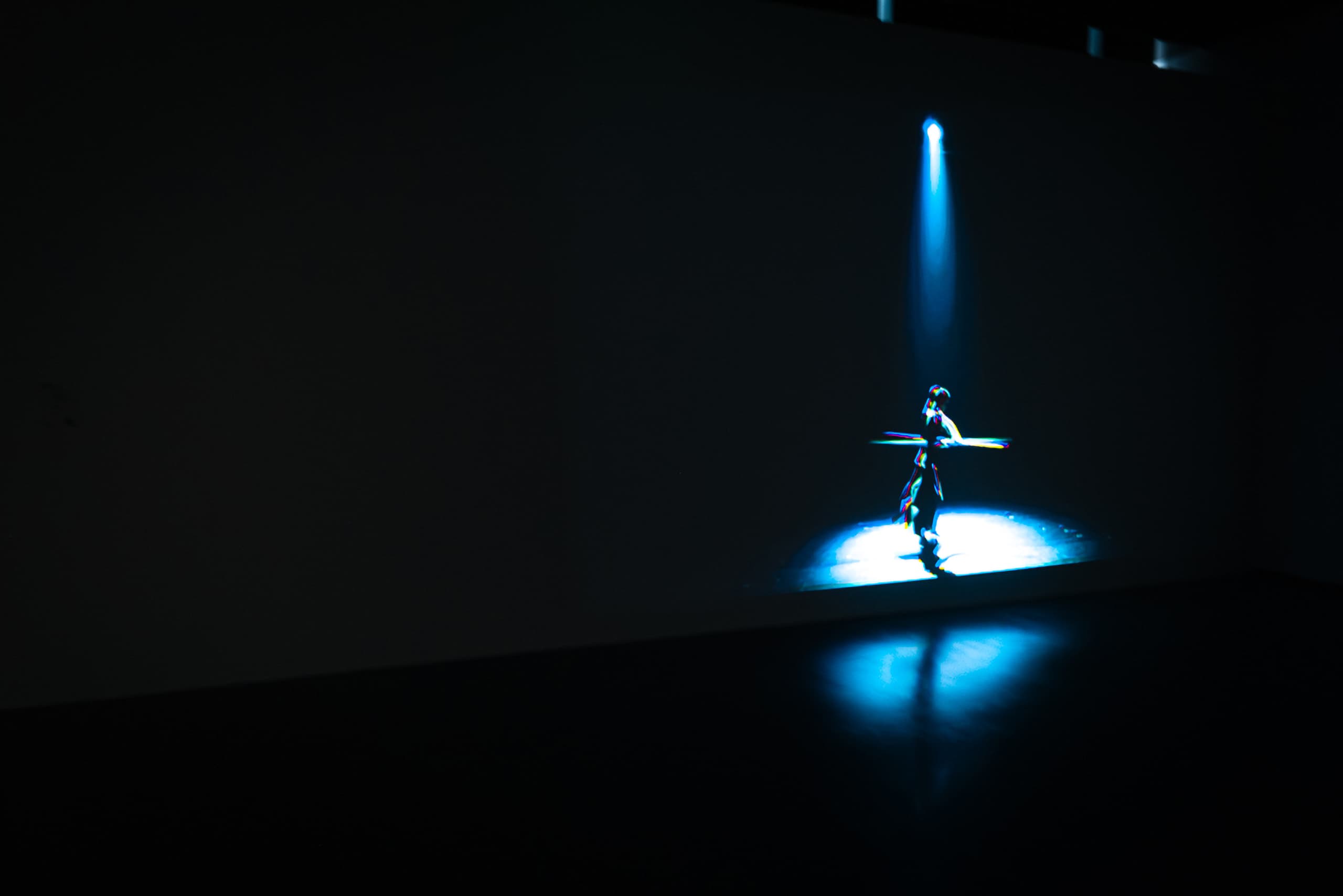
Where was I?
Right. So.
The “original” meaning of the artworks has ceased to exist, and the rules of looking at art are being rewritten.
Now, these images on our social media grids serve no purpose other than documenting and announcing our existence to the rest of the world — as if the rest of the world cares — all the artworks in this economy of visibility have been reduced and turned into photo opportunities (Scott Reyburn, 2018)1 and skeletal backdrops for dumb selfies. Eugene Rabkin wrote in 2019 perfectly describing this crowd: “…what he is interested in is the right image, the right brand, the right Instagram selfie. He wants to stand out and fit in at the same time. He wants to be cool and socially accepted at the same time. He wants to be an individual who is a part of the mass.”2 Exhibition spaces are diluted into playgrounds for snapping one picture after another, one selfie after another, an I-was-here picture in front of an artwork is like a form of social currency that, “…enables a person to influence and manage the perception of themselves, by others.” (John Dean, 2021)3. As people parade their overpriced tastes to feel important or cultured, jumping through gallery halls not to look or to be enlightened, but to be seen looking, that is not cultural participation, but pure, self-centred narcissism.
I find that, unbidden, temper and annoyance seem to arrive with disconcerting ease in the aftermath of the pandemic. It feels as if, overnight, an extra billion people were released into the world from their mothers’ wombs, fully grown but probably not so much in their heads — fuck me, there are people everywhere now. What’s worse, it’s apparent that the collective sense of compensation has kicked in, there’s that urge to reclaim lost time, and museums and other cultural establishments have become prime hunting grounds for this frenzy. A photo in front of Mount Fuji — you are just another dumb tourist, but posing beside a grandiose abstract painting by a Japanese artist? It tells a whole different tale. Having already encountered the images on their phones, the swarms of locusts are ready to descend, cameras raised, and the hunt for the pre-scripted images begins.
And boy, the museums smelled them too, traps are baited, gates are open.
Rick Owens once said that going to a museum feels like going to church for him, I don’t go to church but that sentiment is shared. Museums are like my haven, places where I can escape to, places where I can be awed and cleansed, they are the society’s cultural gatekeepers, the taste makers who define how art and objects are presented and experienced, as well as what is legitimised as art in the first place (Steve Lohr, 2014)4.
The etymology of the word “museum” derives from the ancient Greek “mouseion”, meaning a place dedicated to the Muses, a site of learning and contemplation, in other words, from its very inception, the museum has assumed the role of a guardian of human knowledge. Yet this sense of sanctuary is inseparable from institutional authority. We’ve probably all heard it from that one friend at the dining table one night after a few drinks, that museums are just a load of elitist bollocks. Well, he or she is not entirely wrong and yes, this guardianship has never been be neutral and probably never will be because, systems of knowledge and systems of power often come hand in hand, as Michel Foucault would like to remind us, the acts of selection and classification, curation and hierarchy, are essentially, forms of disciplinary power in themselves.
Building on this, scholars like Tony Bennett and Eilean Hooper-Greenhill discuss how, conventionally, museums construct a “pedagogical space”, environments which actively confine visitors as spectators rather than participants through the use of display cases, labelling, lighting, and security measures, all conspiring to create both a physical and symbolic separation, a subtle but firm lookie-no-touchie zone reinforcing institutional authority and creating an implicit “barrier” to direct engagement between the viewer and the artworks.
Either way, that’s not the point I want to raise. Foucault should not be what’s on the table right now, so let’s try this again.
In the digital age, museums started to embrace themselves more as entertainers for the masses, in lieu of producers of meanings, perhaps less by choice than by sheer necessity of the times. Especially after COVID — it was like a dagger to the heart to so many institutions and establishments, it’s not really about sympathy here but I mean, can you blame them really?
Exhibition content is now designed almost categorically with social media aesthetics in mind, a trend that has intensified with all the bloody immersive exhibitions on the rise — here’s a piece of “experience” that you’ve never experienced before, snap a pic and off you go. The ideas and intentions of the curators, which (supposedly) developed over weeks if not, months, then distilled into and articulated through the (supposedly) meticulously crafted wall texts, somewhat fade into irrelevance. Spectators are not simply there to complete the work or the exhibition as Duchamp proposed, they are the centre of the exhibits now, appearing on everyone else’s photo feeds, what lies in the background of the photo is merely interchangeable content, as long as it’s visually pleasing.
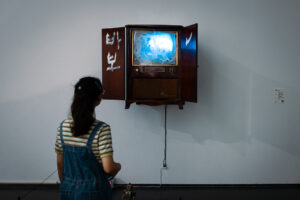

Whether these types of exhibition still operate within the same underlying structure of control is, once again, beside my point, but let’s say, for argument’s sake, that they no longer do, that this invisible wall between audience and artwork is dissolving, what emerges instead is a fundamentally altered intention on the part of the visitor. When you step into an exhibition, immersive or not, what’s the first thing that crosses your head? Exactly — how do I get the best shot? Or worse, forget “the best”, you snap away a dozen shots hoping one of them might eventually do the trick. Rather than a desire to discover and to learn, the locusts are only focused on asserting existence by relentlessly harvesting images, deflating the works to trivial consumables for easy digestion with the self placed squarely right at the centre.
This shift in the mindset of both the museums and the spectators inevitably produced another spectrum. The artists ain’t dumb, if anything, they are probably among the most sensitive players in the game, and of course they would pick up the trend. Attention gradually began to recalibrate from form, expression or inquiry, towards impact and visibility: how a work performs in a space, how it is photographed, how efficiently it can deliver an “experience”. Remember Zombie Formalism? If you don’t, look it up — in fact, don’t. The movement proved to be nothing more than a bubble, one that naturally bursts for no reason other than the fact that the works themselves were utterly hollow bullshit. And it’s safe to bet the artists knew precisely what they were producing.
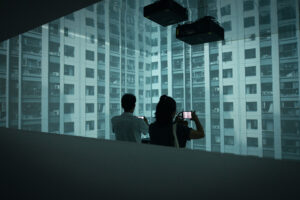
If the museums are the gatekeepers moulding our senses of aesthetics and beauty in the contemporary world, that standard has undeniably been blurred by the flood of circulating images. The more images there are, the more museums measure it as an opportunity to sell more tickets, the more shitty, like-generating, mediocre content is produced by the artists, the more identical pictures get taken, and the vicious cycle doesn’t end.
If snapping a photo helps you engage with the work, then by all means, go right ahead. But we all know that won’t be the case. Most photos you take of artworks just sit in the Photos app, occupying storage space, until one day, when on a flight with no network and a few hours to kill, the screen lights up, and you take an inventory of your life as you scroll through those terrible photos you’ve taken, with no recollection of the art or the experience whatsoever.
At the very opening of this piece, I started with something, well, rather mean and nasty, it was a conscious, though shameless, mimicry of Thomas Ricker’s initial lunge in his piece Stop Being a Tourist. In closing, I would like to return to the same article, where Ricker had a moment of epiphany while watching the crowd swarm the Mona Lisa with their cameras at the Louvre, and wrote: “I realised then that staring at something beautiful through a 4-inch window isn’t appreciation, it’s voyeurism.”5
To see is to see what you do not see, to understand that you do not understand. I don’t pretend to know how to break the cycle, but here’s a start: put down your fucking phone, see the art.
Footnotes
1. Scott Reyburn, What the Mona Lisa Tells Us About Art in the Instagram Era, 2018
2. Eugene Rabkin, Instagram & Late Capitalism are Responsible For Today’s Sorry State of Fashion, Highsnobiety, 2019
3. John Dean, What the Selfie Phenomenon Tells Us About Ourselves, 2021
4. Steve Lohr, Museums Morph Digitally, New York Times, 2014
5. Thomas Ricker, Stop being a tourist — an ode to the loss of serendipity, The Verge, 2014